- Identity explained
- All periods
- Morocco
- Algeria
- Tunisia
Who Are the Amazigh? An Introduction to the Imazighen of North Africa
The Imazighen are the indigenous peoples of North Africa and the Sahara, speaking related Amazigh languages across Morocco, Algeria, Tunisia, Libya, Egypt, the Sahel and a large diaspora.
Specialist review not recorded. What our review labels mean.
The short answer
The Imazighen are the indigenous peoples of North Africa and the Sahara: communities whose ancestral languages belong to the Amazigh (Berber) branch of the Afroasiatic family, and whose presence in the region long predates the Arabic-speaking, Ottoman and European political orders that later governed it. Today they are found principally in Morocco and Algeria, with significant communities in Libya, Tunisia, Egypt, Mauritania, Mali, Niger and Burkina Faso, and with large diaspora populations in France, Belgium, the Netherlands, Spain, Germany, Canada and the United States.1
That sentence is easy to write and much harder to draw a boundary around. Amazigh identity is not a single ethnicity in the way that phrase is often imagined. It covers speakers of at least a dozen distinct language varieties, mountain farmers and oasis traders, Saharan pastoralists and Mediterranean city dwellers, people who describe themselves first as Kabyle or Rifian or Tuareg, people who describe themselves as both Arab and Amazigh, and people whose families stopped speaking an Amazigh language generations ago but who still claim the heritage.2
Amazigh, Imazighen, Tamazight, Berber
Four words do most of the work, and getting them straight makes everything else clearer.
| Term | What it means | How to use it |
|---|---|---|
| Amazigh | A single person, or the adjective | An Amazigh writer; Amazigh history |
| Imazighen | The plural: the people | The Imazighen of the Rif |
| Tamazight | Used both for the language family in general and for particular standardised or regional varieties | Always say which sense you mean |
| Tamazgha | A modern Amazigh cultural term for the wider indigenous homeland across North Africa and the Sahara | A cultural and geographical concept, not a historical state |
| Berber | The older external label, from Greek and Latin usage via Arabic barbar | Widely recognised; not the preferred self-designation for many people |
You will very often read that Amazigh means “free man” or “noble”. This is the popular interpretation, and it carries real meaning for the modern cultural movement, but it is an interpretation rather than a settled etymology; linguists have proposed several derivations and the evidence is genuinely thin. A responsible summary is that the word is an old indigenous self-designation attested in classical sources in forms such as Mazices and Mazax, and that the “free” gloss is a widely held modern understanding rather than a demonstrated fact.3
Berber is not a slur, but it is not neutral either. It descends from a Greek and Latin word for outsiders, entered Arabic as barbar, and was hardened into a supposed racial category by French and Spanish colonial administrators who used it to sort and govern North Africans. Many Imazighen prefer their own term for exactly that reason. Others use Berber comfortably in English or French. We use Amazigh by default and Berber where clarity or a source requires it. For the full argument see Amazigh or Berber?.
Where Amazigh communities live
There is no single Amazigh territory with a border. There is instead a long, discontinuous archipelago of communities stretching from the Atlantic coast of Morocco to the Siwa Oasis in western Egypt, and from the Mediterranean shore deep into the Sahel.
- Morocco. The largest concentration. Tashelhit speakers in the Souss and Anti-Atlas; Central Atlas Tamazight speakers in the Middle and High Atlas; Tarifit speakers in the Rif; and Amazigh-descended populations in every Moroccan city.
- Algeria. Kabyle speakers in Kabylia east of Algiers; Chaoui speakers in the Aurès; Mozabites in the Mzab valley; Tuareg communities in the Ahaggar and Tassili; and smaller groups such as the Chenoua and the Zenete-speaking oases of the south-west.
- Libya. Nafusi speakers in the Nafusa Mountains, communities in Zuwara on the coast, Ghadames in the west, and Tuareg populations in the Fezzan.
- Tunisia. A much smaller number of speaker communities, concentrated in the south, including Djerba, Matmata, Tamezret, Chenini and Douiret.
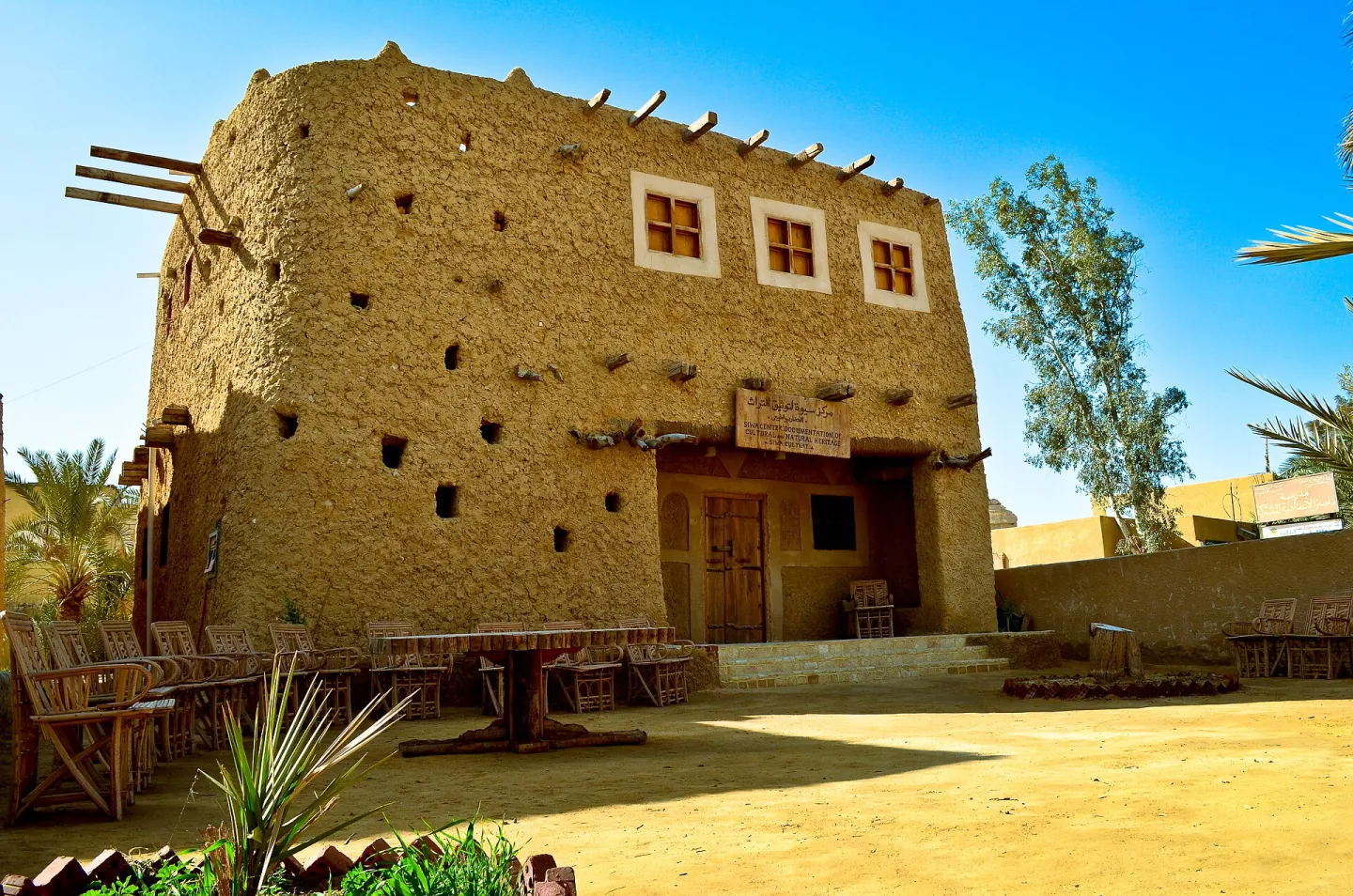
- Egypt. The Siwi-speaking population of the Siwa Oasis, the easternmost Amazigh-speaking community.
- The Sahara and Sahel. Tuareg populations across southern Algeria, southern Libya, Mali, Niger and Burkina Faso, and Zenaga heritage communities in south-western Mauritania.
- The diaspora. Very large Rifian, Kabyle and Souss-origin communities in France, Belgium, the Netherlands and Spain, and growing populations in Canada, Germany and the United States.
See our regional communities directory for a profile of each, and Where Is Tamazgha? for how these communities are mapped as a whole.
How many Imazighen are there?
Nobody can give you an exact figure honestly, and you should be sceptical of anyone who does. The obstacles are structural rather than technical.
- Most North African states either do not ask about language and ethnicity in their censuses, or do not publish the results in a granular form.
- Where figures exist, they usually measure language use, not identity. A person who identifies as Amazigh but grew up speaking Arabic disappears from the count.
- Language shift is ongoing and uneven, so any figure ages quickly.
- Counting is politically charged. Higher figures support claims for language rights and recognition; lower figures support the argument that these are minority concerns. Both sides have an incentive to round in their own direction.
What can be said with reasonable confidence: Amazigh-language speakers number in the tens of millions, with the largest populations in Morocco and Algeria. Moroccan census reporting has indicated that a substantial minority of the population uses an Amazigh language, and Algeria’s Kabyle-speaking population alone is usually estimated in the millions. People who identify as Amazigh, or of Amazigh descent, are considerably more numerous than people who currently speak an Amazigh language.4
A very short history
The deep past belongs to indigenous North Africans generally, not to a labelled ethnic group. Archaeologists trace continuous human occupation of the Maghreb across the Iberomaurusian and Capsian traditions, and ancient DNA from sites such as Taforalt in eastern Morocco shows a distinctive North African population profile well before any of the names in this article existed.5 Applying the label Amazigh backwards into prehistory is a projection, and we flag it as one.
From roughly the second millennium BCE, Egyptian records name western neighbours — the Libu, the Meshwesh, the Tehenu — whose names later scholars connect, with varying confidence, to the ancestors of Amazigh-speaking populations. Greek and Roman writers describe Libyans, Numidians, Mauri, Gaetulians and Garamantes. Numidia under Massinissa in the second century BCE and Mauretania under Juba II around the turn of the era were substantial North African kingdoms with their own coinage, cities and diplomacy.6
The Arab conquests of the seventh and eighth centuries CE began a transformation that took many centuries and worked unevenly: Islamisation was relatively rapid, Arabisation of language was slow and partial. Amazigh dynasties then dominated the medieval Islamic west — the Almoravids and Almohads ruled from the Sahara to Spain — before Ottoman, then French, Spanish and Italian rule reorganised the region again. Independence brought Arab-nationalist state projects that in several countries actively suppressed Amazigh language and cultural expression, and it is against that backdrop that the modern Amazigh cultural movement took shape from the 1960s onward.7
The full sequence, with dates and caveats, is set out in our complete timeline.
Language, culture and what actually connects these communities
The clearest connective tissue is linguistic. Amazigh languages form a coherent branch of Afroasiatic, related at a deep level to ancient Egyptian, Semitic and Cushitic languages. But relatedness is not the same as mutual intelligibility: a Tarifit speaker from Nador and a Tamasheq speaker from Timbuktu cannot simply converse, any more than a Portuguese speaker and a Romanian speaker can.8 See Tamazight Explained.
Beyond language, comparisons need care. There are recurring features across many Amazigh societies — customary legal institutions and village or lineage assemblies, strong traditions of oral poetry and sung performance, distinctive weaving and silver-working traditions, agricultural and pastoral calendars — but their specific forms are regional. Kabyle village governance, Mozabite Ibadi communal institutions and Tuareg social organisation are genuinely different systems. Treating one as representative of all Imazighen is the single most common error in popular writing on the subject.
Religion follows the same pattern. The overwhelming majority of Imazighen today are Muslims, mostly Sunni, with the important exception of the Ibadi communities of the Mzab, Djerba and the Nafusa Mountains. Historically, North Africa was also home to major Christian and Jewish populations with deep indigenous roots — Augustine of Hippo was a North African, and Jewish communities in the Atlas and the Draa valley were long-established before the twentieth-century emigrations.9
Where Amazigh identity stands today
The last quarter-century has changed the legal position substantially. Morocco recognised Amazigh as an official language in its 2011 constitution, with implementing legislation following in 2019. Algeria recognised Tamazight as a national language in 2002 and as an official language in a 2016 constitutional revision, and made Yennayer, the Amazigh new year, a public holiday from January 2018. Libya’s post-2011 politics opened space for Amazigh language activism that had been criminalised under the previous government.10
Recognition on paper and change in classrooms, courts and broadcasting are different things, and the pace of implementation is a live argument in every one of these countries. Meanwhile the diaspora has become a central site of Amazigh cultural production — in music, publishing, satellite broadcasting and online — which is a genuinely new development in this history.
Read next: The Modern Amazigh Cultural Revival and Are North Africans Arab or Amazigh?.
Sources and further reading
Numbered markers in the text refer to the works below. We cite published scholarship, primary texts and institutional documents; we do not cite page numbers we have not verified, and we do not treat encyclopaedias or aggregators as final authorities on substantive claims.
- Michael Brett and Elizabeth Fentress, The Berbers (Oxford: Blackwell, 1996).Publisher record
- Bruce Maddy-Weitzman, The Berber Identity Movement and the Challenge to North African States (Austin: University of Texas Press, 2011).Publisher record
- Salem Chaker (ed.), Encyclopédie berbère (Aix-en-Provence: Édisud, later Peeters, 1984– ), entries on Amazigh terminology and self-designation.
- Hsain Ilahiane, Historical Dictionary of the Berbers (Imazighen) (Lanham: Rowman and Littlefield), entries on demography and distribution.
- Marieke van de Loosdrecht et al., “Pleistocene North African genomes link Near Eastern and sub-Saharan African human populations,” Science 360 (2018).PubMed record
- Gabriel Camps, Les Berbères: mémoire et identité (Paris: Errance, 1987).
- Abdallah Laroui, The History of the Maghrib: An Interpretive Essay, trans. Ralph Manheim (Princeton: Princeton University Press, 1977).
- Maarten Kossmann, The Arabic Influence on Northern Berber (Leiden: Brill, 2013).
- Yves Modéran, Les Maures et l’Afrique romaine (IVe–VIIe siècle) (Rome: École française de Rome, 2003).
- Kingdom of Morocco, Constitution of 2011, Article 5, and Organic Law 26.16 (2019); Algeria, constitutional revisions of 2002 and 2016.Morocco ConstitutionMorocco Organic Law 26-16Algeria Constitution
Spotted an error, a better source or a spelling that a community prefers? Send us a correction. Substantive corrections are logged on the article once made.