Place and cultural landscape
Mauretania (the ancient kingdom)
The ancient kingdom and later Roman provinces of north-western Africa — modern northern Morocco and western Algeria — not the modern state of Mauritania.
Names, spellings and related terms: Mauretania Tingitana · Mauretania Caesariensis · kingdom of the Mauri
Source check: 2026-10-05. Source-linked additions and identified corrections checked; independent specialist review remains pending.
- Type
- Ancient kingdom, later two Roman provinces
- Modern territory
- Northern Morocco and north-western Algeria
- Key centres
- Volubilis, Tingis (Tangier), Iol/Caesarea (Cherchell), Tipasa
- Important
- Entirely distinct from the modern Islamic Republic of Mauritania, which lies far to the south-west
A name that causes confusion
Ancient Mauretania and the modern country of Mauritania are different places with similar names. Ancient Mauretania was the land of the Mauri, in the far north-west of Africa — roughly northern Morocco and western Algeria. The modern state took its name much later, from French colonial usage referring to populations further south. Any source that treats them as the same place is unreliable.
Amzruy
Mauretania was a kingdom in contact with Carthage, Numidia and Rome from at least the second century BCE; its king Bocchus betrayed Jugurtha to Sulla in 105 BCE. Under Augustus, Juba II was installed as client king, and his court at Caesarea became a centre of Hellenistic scholarship and art. After the murder of his son Ptolemy on the orders of Caligula, Rome annexed the kingdom in 40 CE and divided it into two provinces: Mauretania Tingitana in the west and Mauretania Caesariensis in the east.
Roman authority in the interior was always partial. Late antique sources record independent Moorish kingdoms operating across the region, and Yves Modéran’s work has substantially rewritten how historians understand these polities in the Vandal and Byzantine centuries.
What survives
Volubilis in Morocco, a UNESCO World Heritage Site, preserves an unusually complete provincial city with mosaics and civic architecture, and remained occupied long after Roman withdrawal — it was associated with the earliest Idrisid presence in the region. Cherchell in Algeria holds substantial remains and an important museum collection from Juba II’s capital, and Tipasa nearby is also a World Heritage Site.
Tipasa and the problem of mixed evidence
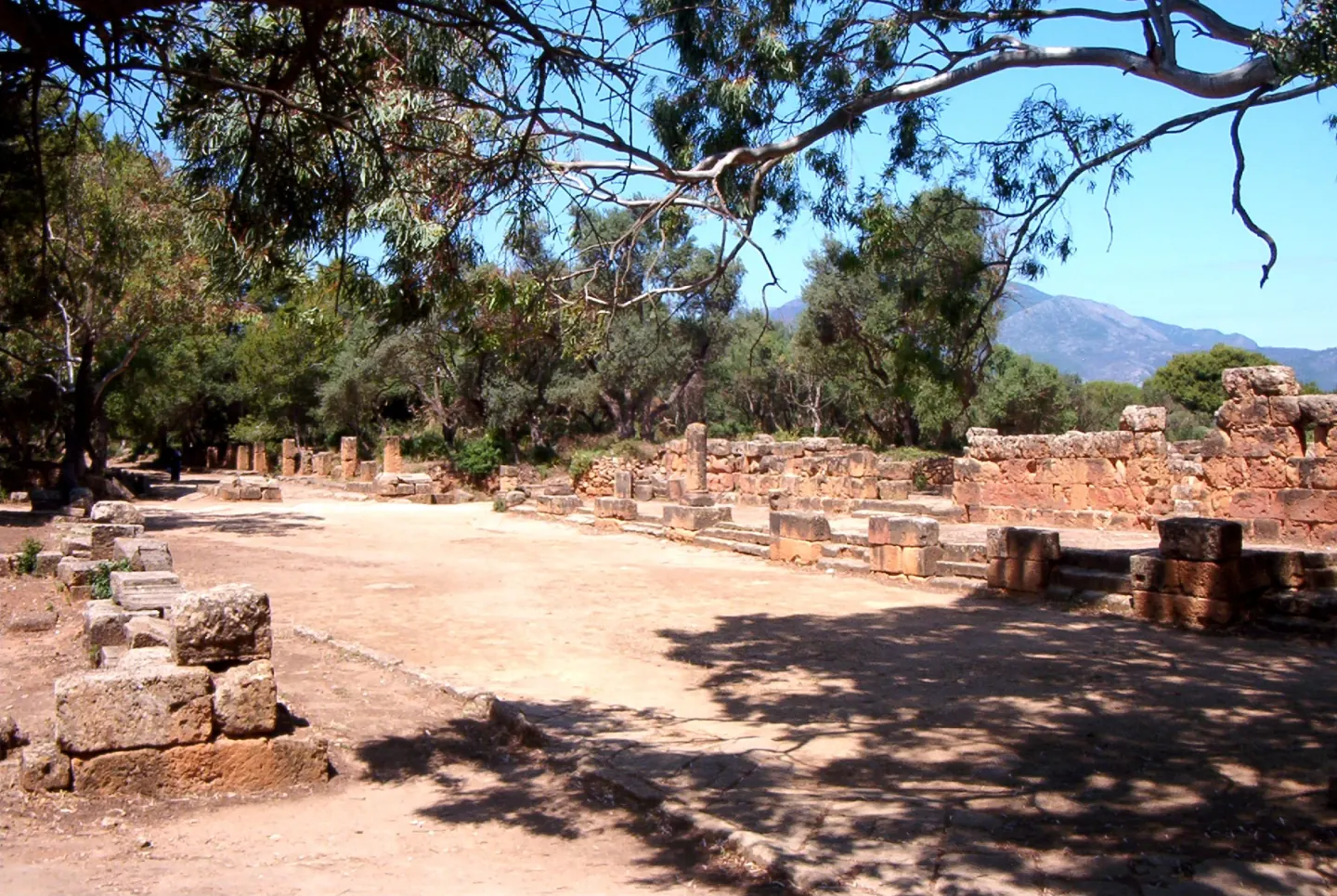
The World Heritage property at Tipasa includes two archaeological parks and the Royal Mauretanian Mausoleum as distinct components. The town’s Punic cemetery and later Roman and Christian remains document different uses of the same coastal setting. The mausoleum combines a local circular funerary form with architectural features drawing on wider Mediterranean traditions. Neither a classical-looking monument nor a Punic object automatically establishes the language or identity of every resident. 4
This is particularly important for Mauretania, where royal history, urban archaeology and Roman provincial administration overlap without being identical. The date of an inscription or building must be established before it is used to illustrate Juba II’s kingdom. The Volubilis profile follows a related distinction between the ancient city and its early Islamic occupation; the end of Roman government did not mean the end of settlement. 5
Sources and further reading
- Duane W. Roller, The World of Juba II and Kleopatra Selene (London: Routledge, 2003).
- Yves Modéran, Les Maures et l’Afrique romaine (IVe–VIIe siècle) (Rome: École française de Rome, 2003).
- Susan Raven, Rome in Africa, 3rd edition (London: Routledge, 1993).
- UNESCO World Heritage Centre, Tipasa, World Heritage List no. 193, inscribed 1982, statement of Outstanding Universal Value.
- UNESCO World Heritage Centre, Archaeological Site of Volubilis, World Heritage List no. 836, inscribed 1997.
Community names, spellings and emphases vary. If you can point us to a better source or a preferred spelling, tell us — corrections are logged once made.